
All Baking Guides
Pan Conversion Basics for Consistent Baking
Understand pan area, batter depth, and scaling ratios with a repeatable method you can test in your own oven.
Read Guide
How Bakeware Material Changes Your Results
See how metal, glass, ceramic, and silicone change browning speed, edge set, and crumb so you can adjust temperature with confidence.
Read Guide
How to Adjust Baking Time After Pan Changes
Learn a timing workflow based on batter depth and doneness signals, with practical checkpoints instead of guesswork.
Read Guide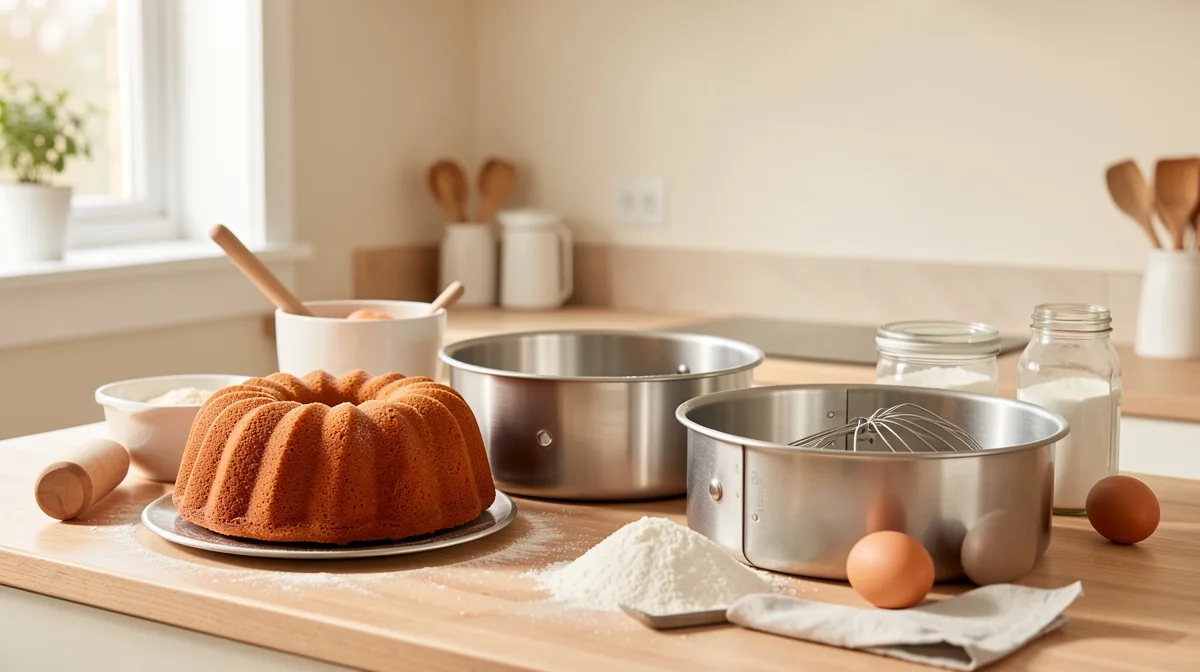
Using Bundt, Tube, and Springform Pans Correctly
Use safe conversion rules for Bundt, tube, and springform pans, including fill limits, release strategy, and structure protection.
Read Guide
Common Pan Conversion Errors and Fixes
Identify common conversion failures early and apply targeted fixes for overflow, underbaking, dense centers, and uneven color.
Read Guide
Step-by-Step Pan Conversion Video Guide
Follow the full conversion workflow from planning and fill control to oven checkpoints, finish decisions, and post-bake review.
Watch Guide
Metric and US Baking Measurement Conversion That Actually Works
Convert between US and metric measurements with ingredient-specific values, method control, and validation steps that reduce drift.
Read Guide
How to Scale Recipes by Servings Without Breaking Texture
Scale recipes by servings without losing texture by handling eggs, leaveners, pan depth, and staged bake checks correctly.
Read Guide
Oven Temperature Conversion and Calibration for Reliable Baking
Convert Fahrenheit and Celsius accurately, then calibrate oven behavior using offset, swing, rack mapping, and retest logic.
Read Guide
Cups to Grams by Ingredient: Practical Reference for Consistent Results
Use a practical cups-to-grams reference by ingredient family and troubleshoot conversion issues from visible bake symptoms.
Read Guide
Planning Multi-Pan Bakes: Loaf, Muffin, and Sheet Pan Conversion Workflow
Plan multi-pan sessions across loaf, muffin, and sheet formats with clear fill targets, staggered pull times, and production notes.
Read GuideFrequently Asked Questions
How accurate is the conversion factor in real baking?
The calculator provides a strong geometric baseline for most cakes, bars, and quick breads. Final results still depend on batter density, pan depth, and your oven performance, so always verify doneness near the end.
Can I switch between round, square, and rectangle pans?
Yes. You can convert between supported shapes by comparing usable pan area and expected batter depth. This makes cross-shape planning much easier when the original recipe pan is unavailable.
Should oven temperature always change after conversion?
Not always. If batter depth remains close, the original temperature can still work. When depth or pan finish changes significantly, a small adjustment often improves texture and color.
What adjustments are needed for different pan materials?
Dark pans usually brown faster, while glass and ceramic may hold heat longer. Start with a conservative adjustment, then confirm with visual cues and a center doneness check.
What is the correct way to measure a baking pan?
Measure from inside edge to inside edge. For round pans, measure diameter across the center. For rectangular pans, measure internal length and width rather than external dimensions.
Will the calculator work for every recipe type?
It is most reliable for cakes, brownies, tray bakes, and similar batters. Recipes with fermentation, laminated dough, or complex structure may require additional recipe-specific judgment.
What should I do with uncommon or custom pan sizes?
Use the closest standard shape as a reference and compare area and fill level. For unusual molds, testing a smaller batch first can reduce risk and improve consistency.
Why does batter depth change baking behavior?
Depth affects how quickly heat reaches the center. Deeper batter often needs more time and sometimes slightly lower heat, while shallow batter can finish earlier and brown faster.
Is this tool useful for bakery or professional workflows?
Yes. Professionals can use it for quick pre-production estimates, then fine-tune with line testing, oven mapping, and batch-specific process controls.
Why do tiny recipe adjustments still matter after scaling?
Scaling handles major quantities, but small components like leavening, spices, and salt can behave differently at scale. Small corrections can improve flavor balance and crumb structure.