Using Bundt, Tube, and Springform Pans Correctly
By KKRECIPE | Published on March 6, 2026
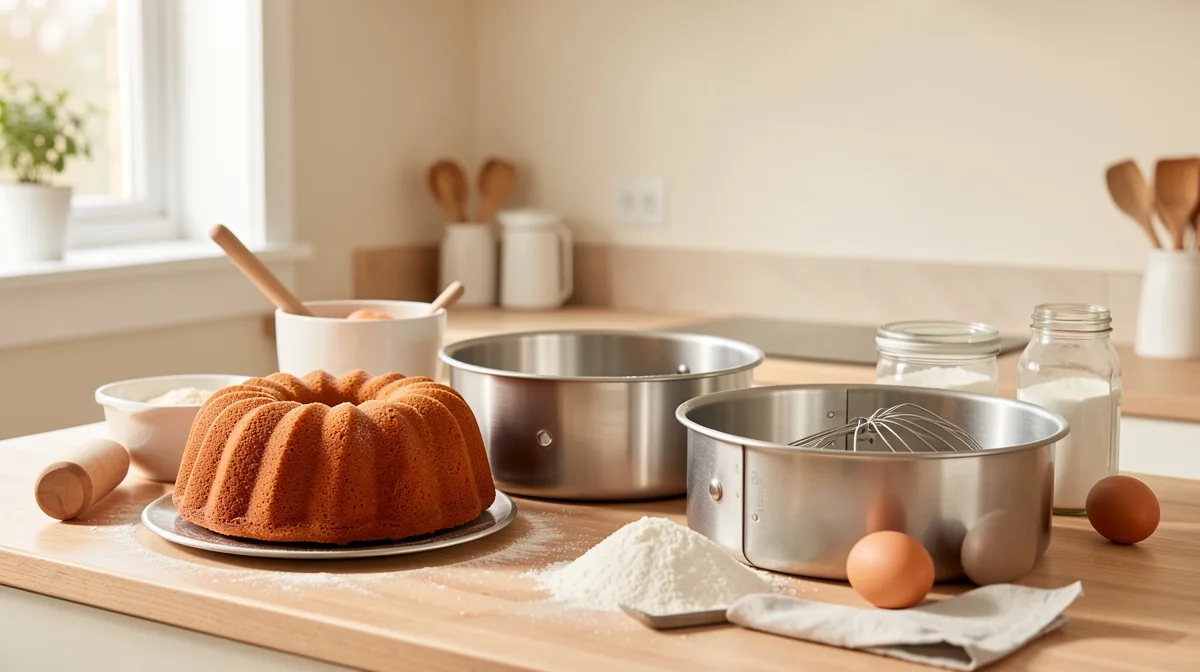
Specialty pans are not only about shape aesthetics; they change structural support, heating paths, and release behavior. Conversion success requires both math and handling discipline. This article is written as a practical reference for real kitchens, not a theory-only summary. The workflow below is designed to reduce failed bakes, improve repeatability, and support responsible publishing standards for useful, trustworthy content.
Treat Specialty Geometry as Functional
Center tubes and complex contours alter heat penetration and crust formation.
Map where heat reaches first and where delayed setting is likely. Decorative shape can hide technical weak points if geometry is ignored.
Field Note: Bundt tests should track where color appears first; hotspot location helps predict overbake risk.
Control Fill Level Precisely
Specialty pans react strongly to overfilling because expansion has fewer safe escape routes.
Use measured fill levels and reserve headroom for rise behavior. Overfill risk includes collapse, overflow, and uneven internal structure.
Field Note: In tube pans, uneven batter distribution around the center column often causes uneven height after cooling.
Prepare for Clean Release
Release quality depends on batter type, surface detail, and prep consistency.
Use a repeatable prep method and verify corners or deep channels before filling. Incomplete prep causes tears that can be mistaken for bake defects.
Field Note: Springform seam checks belong to setup, not troubleshooting; verify lock and base fit before filling.
Handle Springform Seam Risk
Seams can influence moisture and thermal behavior in sensitive formulas.
Use tested wrapping or support methods when the formula or process requires it. Seam-related issues can mimic underbake even when timing seems correct.
Field Note: Use conservative fill on first specialty-pan tests to protect structure and avoid overflow diagnostics later.
Use Tube Pan Support Correctly
Tube structures can help center setting but still require balanced airflow and fill distribution.
Level batter carefully and avoid uneven loading around the center tube. Uneven distribution can create lopsided structure and inconsistent crumb.
Field Note: Release quality depends on timing and prep coverage; write where sticking happened, not just that it stuck.
Use a Specialty Conversion Sequence
Best results come from ordered decisions: capacity, fill, temperature plan, then timing checks.
Follow a fixed sequence each test round so changes remain traceable. Skipping sequence increases rework and makes troubleshooting slower.
Field Note: For decorative pans, compare first and second slices to confirm whether cooling was sufficient.
Protect Final Presentation Quality
Specialty pans are often selected for presentation value, so structural precision matters more.
Cool and unmold using a consistent timeline aligned to batter stability. Rushing release can damage appearance even when bake chemistry is correct.
Field Note: Presentation success should include crumb integrity, not only surface appearance.
Implementation Questions Bakers Ask Most
Do specialty pans always need lower temperature?
Not always. Temperature decisions should follow batter depth, material, and observed browning behavior, not shape alone.
How do I avoid broken details in Bundt cakes?
Use reliable release prep, avoid premature unmolding, and allow enough structural cooling before handling.
Can I convert any round-pan recipe into a tube pan?
Many recipes can be adapted, but support-sensitive formulas require careful testing before full-scale use.
What is the safest first test for specialty pans?
Start with moderate fill, controlled temperature, and dense note-taking on rise, color, and release behavior.
For specialty pans, it also helps to read the conversion fundamentals and confirm final settings with the calculator tool.
A Bundt conversion trial produced uneven release despite good internal doneness. The issue was traced to prep and cooling sequence, not scaling math. After standardizing pan prep and release timing, presentation quality improved while maintaining stable crumb structure.
Practical Case: Round Cake to Bundt Conversion With Release Risks
A lemon cake originally baked in a 9-inch round pan was converted for a Bundt presentation. The first run used aggressive fill and produced soft ridge detail with partial sticking. Notes pointed to overfill and uneven prep in narrow channels rather than formula failure.
The second run lowered fill, improved prep coverage, and used zone-based checks across inner and outer walls. Release improved and slice structure stayed stable after cooling. The conversion succeeded once process matched geometry.
Specialty Pan Reliability Checklist
- Validate pan integrity and locking parts first.
- Use conservative fill on first tests.
- Track hotspot zones by shape.
- Check both outer and inner wall development.
- Standardize prep and release timing.
- Cool with a fixed routine before unmolding.
- Confirm presentation and crumb quality together.
Specialty Pan Decisions That Prevent Rework
Should I maximize fill in first specialty trials?
No. Start conservatively to protect structure and gather reliable behavior data.
What if release works but details look soft?
Review fill level and cooling window; soft detail often comes from process timing, not formula composition.
Can standard pan timing transfer directly?
Only as a baseline. Specialty geometry changes heat paths and requires checkpoint-based validation.
To strengthen specialty conversions, revisit the fundamentals guide and confirm inputs in the calculator before the next batch.
High-quality specialty guides should state tested assumptions clearly so readers can match or adapt the process responsibly.
For visual-first bakes, include slice evidence as well as external photos. Internal structure is part of presentation quality.
Specialty Pan Session: Springform to Tube Pan
A batter originally developed for springform was moved to a tube pan to improve center heating in a taller cake. The first concern was fill symmetry around the tube wall. Uneven distribution produced one high side and one dense side in an early trial, even before timing became the issue.
After switching to weighed distribution in quadrants, rise became more uniform and the crumb showed fewer compressed zones near the inner ring. Bake timing then stabilized because structure developed evenly around the pan. This demonstrates why geometry control often matters before any temperature adjustment.
Release behavior was tracked as well: the cake was cooled to a fixed warm point before turning out. Earlier release caused tearing along the inner seam. By defining both bake checkpoints and release checkpoints, the team reduced loss and improved repeatability for specialty-pan publishing guidance.
Bundt and tube pans can mask underbake because outer structure often looks finished before inner crumb fully sets near dense sections. A probe check in multiple positions is more informative than one center check.
Springform pans add another variable: seam quality and wrap method can alter heat exposure at the base. Note whether foil wrapping or water protection was used so results remain reproducible.
Specialty Pan Control: Fill, Release, and Structure Protection
Specialty pans reward careful setup because geometry strongly influences structure. In Bundt and tube formats, batter is distributed around a central core, so uneven loading creates uneven heating and uneven rise. We reduce this risk by weighing batter portions around the ring rather than pouring in one direction. The result is a more uniform crumb and cleaner slice profile after cooling.
Release planning should be treated as part of baking, not an afterthought. Different pans need different prep methods, and inconsistent prep can mask whether timing or structure caused a failure. For example, a tear on release may be wrongly blamed on underbake when the real issue is incomplete greasing in narrow details. Good notes should separate release-prep errors from bake-timing errors.
Springform pans add seam and base variables. If the seam is loose or wrapped inconsistently, heat exposure at the lower edge can shift and produce texture differences across layers. During tests, we record seam condition and any wrapping method used so final recommendations remain reproducible. This is especially important for readers baking in non-identical equipment.
Tube pans generally improve center heating in tall batters, but they can still hide localized under-set pockets when batter viscosity is high. One central probe is not enough. Use multiple probe points around the ring and compare resistance. This takes extra time, but it catches asymmetry early and prevents collapsed sections during cooling.
Cooling sequence is another key variable. Removing too early from a detailed pan can damage the outer structure, while waiting too long can increase sticking risk depending on sugar level. We use a defined warm-release window and write it in minutes. This creates repeatability across runs and avoids subjective ?wait until it feels right? instructions.
For editorial clarity, publish one specialty-pan case with full context: target fill percentage, checkpoint strategy, and release timing decision. Readers can then adapt the method to their own pan style without guessing which part of the process matters most.
- Distribute batter by weight around ringed pans.
- Track prep method separately from doneness observations.
- Probe at multiple ring locations, not one point.
- Define a warm-release window in minutes.
With specialty pans, consistency comes from process control at every stage: loading, baking, and release. When those stages are documented, results become dependable enough for confident publishing.
Release Integrity Check
For patterned Bundt pans, run a release integrity check during testing: inspect fine ridges, tight corners, and inner tube contact points immediately after unmolding. If detail loss appears only on one side, review batter distribution and pan prep consistency before changing bake time. This targeted check reduces false troubleshooting and keeps specialty-pan recommendations precise.
Include one photo-ready slice note in your records as well, since visual structure in cross-section often reveals issues that outer crust does not show clearly.
In final validation, keep one untouched control bake in the original pan. Comparing control and converted slices side by side helps identify whether texture differences come from geometry or from unrelated process drift. This simple control step improves confidence before publishing specialty-pan recommendations.
Reference Sources
Closing note: specialty pans reward precise fill control and deliberate release timing. Structural consistency starts before the pan enters the oven.